
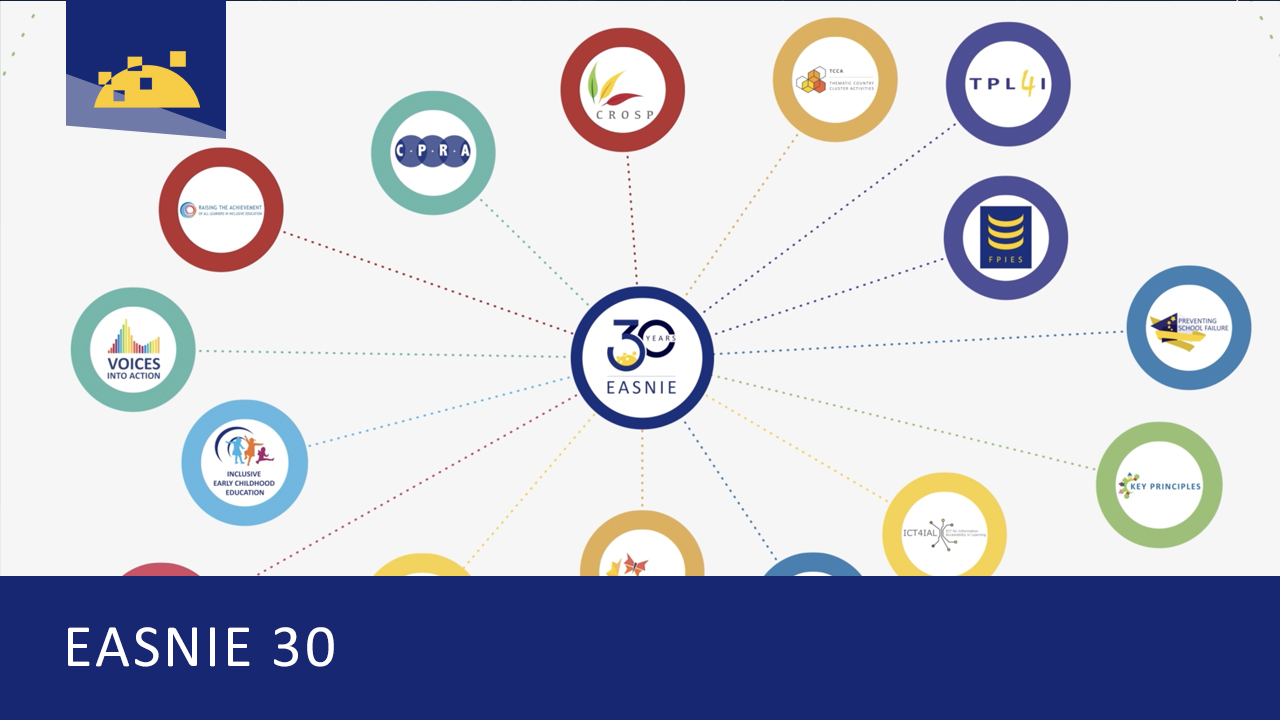
On 19 March 2026, EASNIE brought together senior policy-makers and stakeholders to reflect on three decades of collaboration and to discuss the future of inclusive education across Europe.
The high-level event, held in Brussels as part of EASNIE’s 30th anniversary programme, provided a forum for leaders to review progress in inclusive education and to discuss the policy and practice changes still needed to ensure every learner can participate and thrive.
Thomas Eckert, Director of the Representation of the State of Hessen in Brussels, welcomed the participants to Brussels. EASNIE Chair Don Mahon described inclusive education as ‘a cornerstone of democracy’ and outlined how EASNIE’s work has moved over the last 30 years from a focus on access to education to quality and equity in education.
Roxana M?nzatu, Executive Vice-President of the European Commission’s Directorate-General for Education, Youth, Sport and Culture (DG EAC) praised EASNIE’s work over the last three decades and said that she hopes the organisation continues to grow and help countries improve their education systems. She stated that ‘inclusion is the very essence of a high-performing education system’ and that the most equitable education systems in the European Union are also the ones that perform the best.
If a system doesn’t work for the most vulnerable of learners, it cannot be a successful system; it is just a selective system.
She outlined the need to prepare for future challenges, but also for opportunities that things like artificial intelligence and technological advances can bring for learners and schools.
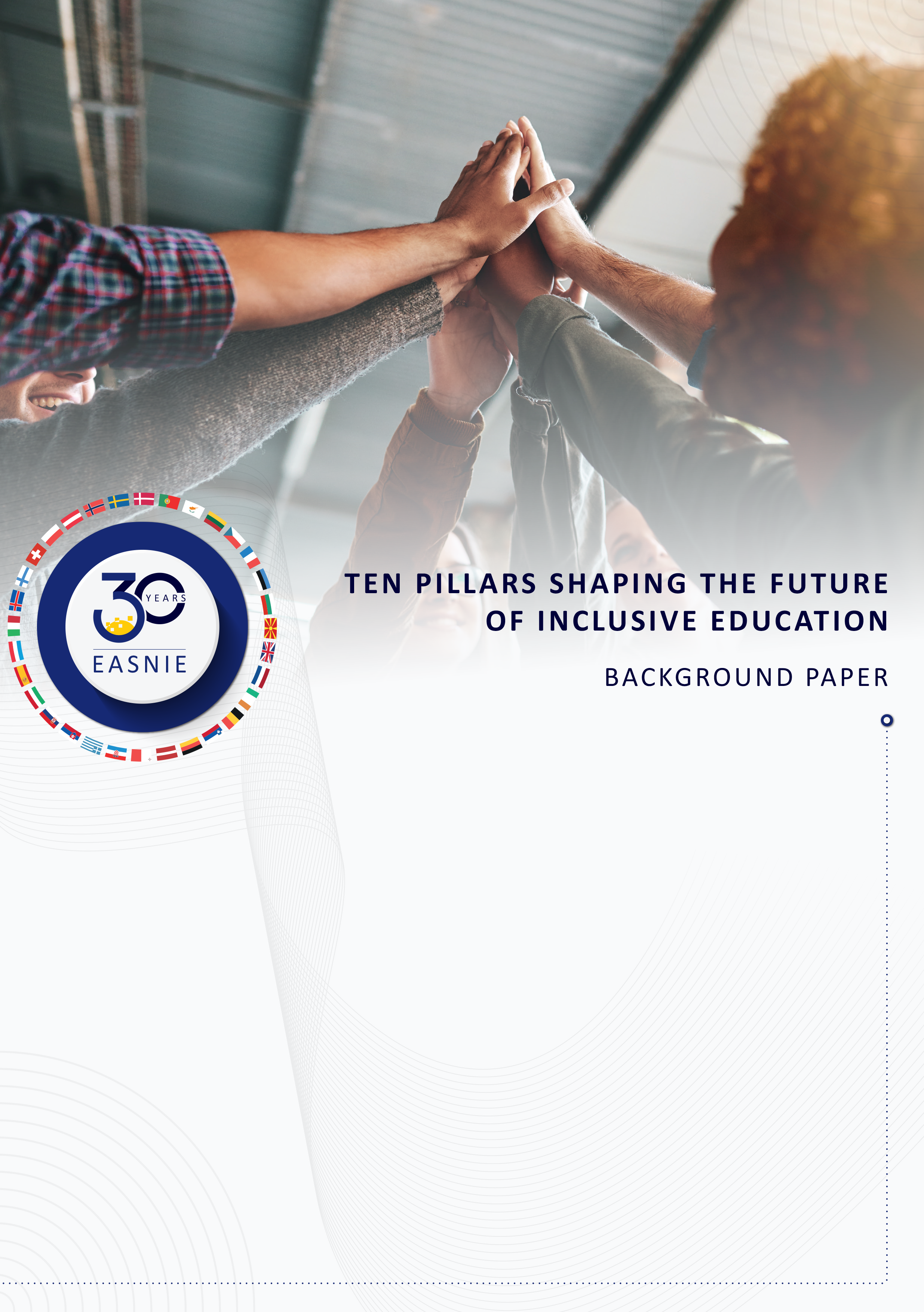
The event marked the launch of EASNIE’s Ten Pillars Shaping the Future of Inclusive Education – a framework intended to guide next steps in policy and practice across systems. Introducing the Ten Pillars, EASNIE Director Jo?o Costa described how they interconnect and that progress in one area depends on coherence across all others. Drawing on past work by EASNIE and other international organisations, the Pillars stress that inclusive education is a rights-based, system-level responsibility requiring shared governance, ethical digital innovation, stronger teacher preparation and co-ordinated services beyond schools. Dr Costa ended his presentation with a call to collective action and a renewed commitment to embedding inclusion as the core of educational quality.
A high-level panel discussion reflected on the progress made in inclusive education to date and explored ways to strengthen inclusive education policies for the future. Outlining the European Union’s Union of Skills, Pia Ahrenkilde Hensen, Director-General of DG EAC, described inclusive education as an investment, not a cost, to ensure strong and resilient workforces and societies. Li Andersson, Chair of the European Parliament Committee on Employment and Social Affairs, described the connections between education and the labour market and the importance of ensuring everyone has a quality education to give them the best chance in the labour market. Izabela Zi?tka, Undersecretary of State, Ministry of National Education, Poland, highlighted that inclusive education is not simply about physical presence in the classroom: it is about learners actively participating in the classroom and a genuine sense of belonging.
In a panel on moving from commitment to implementation, Lucie Cerna from the OECD’s Directorate for Education and Skills, Krzysztof Stefan Iszkowski from the European Commission Directorate-General for Employment, Social Affairs and Inclusion and Justine Sass from UNESCO’s Section of Education for Inclusion and Gender Equality explored evidence, policies and practices that have proven effective in advancing inclusive education.
A final panel focused on supporting inclusive education through shared societal commitment. The speakers were David Rodrigues, Professor of inclusive education, Lilia Touil, French jurist, youth advocate and founder of OUI Legacy, and Brikena Xhomaqi, Director of the Lifelong Learning Platform.
The high-level event and the Ten Pillars reflect EASNIE’s on-going commitment to working with its member countries and partners to build more inclusive education systems. In his closing address, Jo?o Costa stressed again the importance of collaboration across and between sectors, countries and organisations, stating that:
Inclusive education is not a destination. It is a continuous process that reflects our democratic values, our responsibility towards every learner.
Find out more and download the Ten Pillars on the publication page. The EASNIE 30 page has more details on other anniversary events, including the Inclusion Talks webinar series.
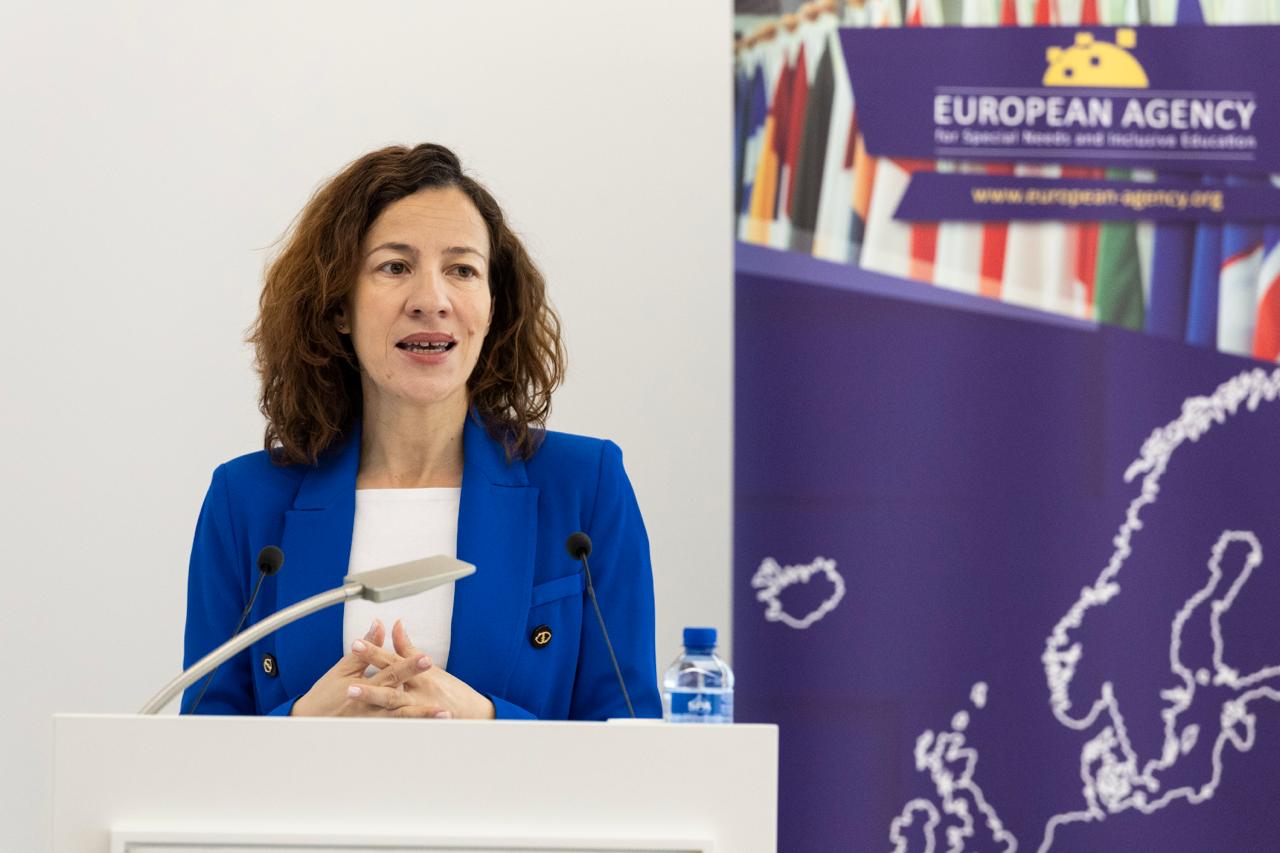
Roxana M?nzatu, Executive Vice-President of the European Commission’s Directorate-General for Education, Youth, Sport and Culture, speaks at the event (? European Union, 2026, licensed under CC BY 4.0. Lukasz Kobus)