

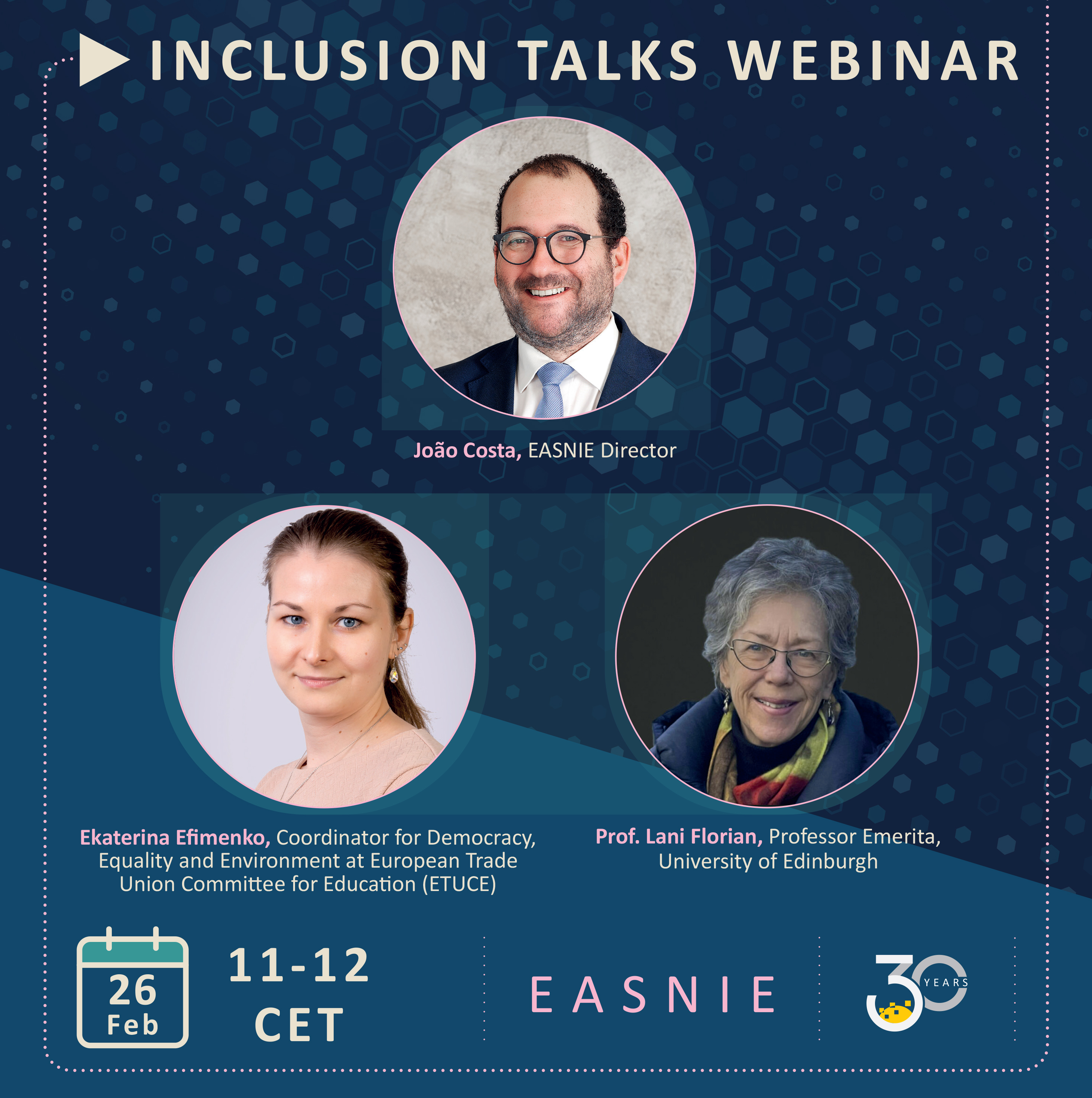
On 26 March 2026, EASNIE hosted an Inclusion Talks webinar on inclusive education and financing models. Hosted as part of EASNIE’s 30th anniversary activities, the webinar brought together perspectives on how funding systems can better support equity and inclusion.
Opening the webinar, EASNIE Director Jo?o Costa stressed that financing is a key driver of inclusive system change. He explained that how resources are allocated often matters more than how much is spent, particularly in avoiding funding approaches that reinforce learner segregation. He also underlined how the webinar built on EASNIE’s long-standing work, including Financing Policies for Inclusive Education Systems and recent Technical Support Instrument work, such as with Finland and Ireland.
Drawing on international evidence, Paulo Santiago, Head of the Policy Advice and Implementation Division at the OECD Directorate for Education and Skills, outlined key principles for financing equity and inclusion. These include the importance of aligning funding strategies with clear inclusion goals, investing in early education to prevent learning gaps, and ensuring that resources are directed where they can make the greatest difference. He emphasised that equity and efficiency can go hand in hand, particularly when systems focus on early intervention, flexible resource allocation and strong monitoring mechanisms.
Brendan Doody, Principal Officer in Ireland’s Department of Education and Youth, gave a national perspective, providing an overview of Ireland’s current investment in special and inclusive education. He described school-based allocation of additional teaching support and recent developments such as assistive technology, education-based therapy services and psychological supports. He also spoke about the challenges involved in progressing towards a more inclusive model, stressing the need for political prioritisation, sustainable funding and broad stakeholder consensus on what inclusive education means in practice.
The webinar reinforced how financing models are fundamental to building fair, sustainable and inclusive education systems, and must be designed to support prevention, early intervention and whole-school development rather than compensatory responses after exclusion has already occurred.
Watch the webinar below, or find out more about the speakers on the Inclusive Education and Financing Models page.
EASNIE’s Inclusion Talks YouTube playlist contains recordings of all the Inclusion Talks webinars to date, on themes such as the key principles of inclusive education and teacher preparedness.
The next Inclusion Talks webinar, on inclusive education and learners’ voices, will take place on 30 April. Find out more and register.